A dead battery is one of the most common reasons for a car not starting, but it’s often an avoidable problem. Your Mitsubishi will almost always give you subtle clues that its battery is nearing the end of its life. Learning to spot these early warnings—like a slow start or flickering headlights—can turn a potential emergency into a planned maintenance task. This guide will teach you how to listen to your car and recognize when it’s time for a change. Being proactive makes the Mitsubishi battery replacement process a simple errand instead of a roadside headache, keeping you in control.
Key Takeaways
- Know the signs of a failing battery: A slow engine start, dimming lights, or a battery that's over three years old are clear indicators it's time for a check. Paying attention to these clues helps you replace your battery on your terms, not on the side of the road.
- Choose the right battery for your car: Your Mitsubishi requires a specific battery group size, CCA rating, and type (like AGM). Always check your owner's manual or current battery to find the correct specs for reliable performance.
- Consider professional installation for peace of mind: A professional technician ensures the correct battery is installed safely, resets your car's electronics, and handles the proper disposal of your old battery, making the process completely worry-free.
Top-Rated Battery Brands for Your Mitsubishi
When your car battery starts to fail, choosing a replacement can feel like a chore. With so many brands on the shelf, how do you know which one is right for your Mitsubishi? The good news is that a few names consistently stand out for their reliability, performance, and value. Think of this as your cheat sheet for the top contenders. Whether you prioritize long-term durability, all-weather performance, or a budget-friendly solution, there’s a trusted brand that fits your needs. We’ll walk through four of the most recommended battery brands for Mitsubishi vehicles to help you make a confident choice.
OPTIMA
If you’re looking for a battery that’s built to last, OPTIMA is a top-tier choice. Known for their unique SpiralCell design, these batteries can last up to twice as long as traditional lead-acid batteries, making them a favorite among drivers who value long-term performance and durability. OPTIMA batteries are also engineered to deliver reliable power in extreme weather conditions. That means you can count on your Mitsubishi to start smoothly, whether you’re facing a summer heatwave or an unexpected cold snap. For performance-focused drivers, the investment in an OPTIMA often pays off in longevity and peace of mind.
Odyssey
Odyssey batteries are powerhouses, especially when it comes to starting your engine in tough conditions. They are highly recommended for their impressive Cold Cranking Amps (CCA) ratings, which measure a battery's ability to start an engine in cold temperatures. While we might not see harsh winters here in Florida, a high CCA rating is a great indicator of a battery's overall starting power and reliability. If you have a vehicle with a lot of electronics or simply want the assurance of strong, consistent starting power every time you turn the key, an Odyssey battery is an excellent option for your Mitsubishi.
ACDelco
You’ve probably heard of ACDelco, and for good reason. It’s a trusted brand known for producing reliable batteries that deliver solid performance and a long service life. Many Mitsubishi owners choose ACDelco because their batteries are designed to meet the specific power requirements of various vehicle models, ensuring excellent compatibility and efficiency. You can think of ACDelco as a dependable, all-around performer that gets the job done without any fuss. It’s a straightforward, quality choice that provides consistent performance you can count on for your daily drives around Brandon and beyond.
Duralast
For drivers seeking a great balance of performance and price, Duralast is a fantastic option. These batteries are widely respected for their durability and are frequently recommended for a range of Mitsubishi models. They provide the reliable power you need for everyday driving without the premium price tag of some other brands. Duralast offers a practical, no-nonsense solution that delivers on quality and affordability. If you’re looking for a dependable battery that will keep your Mitsubishi running smoothly without stretching your budget, Duralast is a smart and popular choice.
Breaking Down the Cost of a New Mitsubishi Battery
When your car won’t start, the last thing you want is a surprise bill. Understanding the cost of a new battery ahead of time can make the replacement process much smoother. The final price tag isn't just one number; it depends on the type of battery your Mitsubishi needs, its features, and whether you have it professionally installed. Let's walk through what you can expect to pay and the factors that influence that cost.
Typical Price Ranges
A new battery for a Mitsubishi typically costs between $45 and $250. That’s a pretty wide range, right? On the lower end, you’ll find standard, conventional batteries that get the job done for older models with fewer electronic features. On the higher end are premium batteries, like AGM (Absorbent Glass Mat) types, which are designed for modern vehicles with start-stop technology and lots of power-hungry accessories. The key is finding the right balance of power and price for your specific car and driving habits.
What Affects the Final Cost?
Several key factors determine where your new battery will fall within that price range. The battery’s size, or group size, must match what your vehicle requires. Another major factor is its power, measured in Cold Cranking Amps (CCA), which indicates its ability to start the engine in cold weather. Reserve capacity is also important—it tells you how long the battery can run essential systems if your alternator fails. Generally, batteries with higher CCA and longer reserve capacity cost more. Brand reputation and warranty length also play a significant role in the final price.
Professional Installation vs. DIY
If you’re comfortable working on cars, you might consider replacing the battery yourself. However, it’s a task that comes with risks. Connecting the terminals in the wrong order can damage your car’s sensitive electronics, and handling battery acid requires proper safety precautions. For peace of mind, having a professional handle the installation is the safest bet. Our factory-trained technicians can install the correct battery for your Mitsubishi quickly and safely. We’ll also ensure your old battery is disposed of responsibly, so you don’t have to worry about a thing.
Find the Perfect Battery for Your Mitsubishi
Choosing a new battery for your Mitsubishi can feel like a pop quiz you didn't study for. With all the different numbers, codes, and types, it’s easy to feel overwhelmed. But picking the right one is essential for keeping your car running smoothly and reliably. Getting it right means your car will start every time, your electronics will work flawlessly, and you won’t be left stranded. Let’s walk through exactly what you need to look for to find the perfect match for your vehicle.
Check Your Vehicle's Specs
Before you even start shopping, your first step is to play detective with your own car. Every vehicle has specific battery requirements, and your Mitsubishi is no exception. You’ll need to find a few key pieces of information: the battery group size, the required Cold Cranking Amps (CCA), and whether your car needs a specific type, like an Absorbent Glass Mat (AGM) battery. The easiest place to find this information is in your owner’s manual. If you can’t find it, the label on your current battery is your next best bet. Jotting these details down will make your search much simpler.
Match the Group Size
Battery "group size" sounds technical, but it’s really just about the battery's physical dimensions—its length, width, and height. It also dictates where the positive and negative terminals are located. Getting the group size right is critical because it ensures the battery will fit securely in the tray designed for it. An ill-fitting battery can vibrate excessively, which can lead to internal damage and a shorter lifespan. A proper fit guarantees the cables will connect correctly without stretching or straining. This simple check is vital for the battery’s optimal function and longevity.
Understand Cranking Amps (CCA) and Capacity
Next up is Cold Cranking Amps, or CCA. This number tells you how well the battery can start your engine in cold temperatures (specifically, at 0°F). While we don’t see a lot of freezing weather here in Florida, a higher CCA rating is a great indicator of a battery's overall starting power and quality. You should always choose a battery that meets or exceeds the CCA rating recommended by Mitsubishi. A solid understanding of these ratings ensures your vehicle has the power it needs to perform reliably. Another important rating is Reserve Capacity (RC), which measures how long your battery can power essential electronics if your alternator fails.
AGM vs. Standard Batteries
You’ll likely see two main types of batteries on the shelf: standard flooded lead-acid and Absorbent Glass Mat (AGM). Many newer Mitsubishi models, especially those with power-hungry features or automatic start-stop technology, require an AGM battery. AGM batteries offer some great advantages over traditional ones, including a longer lifespan, faster charging, and better durability. They are also spill-proof, making them safer. While they can be a bit more expensive upfront, their superior performance and longevity often make them a worthwhile investment. Always confirm if your vehicle requires an AGM battery, as using the wrong type can cause issues with your car’s electrical system.
Is Your Mitsubishi Battery Dying? Watch for These Signs
A car battery rarely fails without giving you a few hints first. Learning to spot these early warning signs can save you the headache of being stranded with a car that won’t start. Your Mitsubishi is designed to communicate with you, and its battery is no exception. If you notice any strange behavior with your engine or electronics, it might be time to pay closer attention. Think of it as your car’s way of asking for a little help before a small issue becomes a major inconvenience. From sluggish starts to flickering lights, these clues are your best indicator that a battery replacement might be on the horizon. Let’s walk through the most common signs so you know exactly what to look for.
Slow Engine Crank or Clicking Noises
One of the most classic signs of a dying battery is a slow engine crank. You know that quick, confident sound your Mitsubishi makes when it starts? When the battery is weak, that sound becomes sluggish and drawn-out. It feels like the engine is struggling to turn over. If you hear this, your battery is likely losing its ability to hold a charge.
An even more urgent sign is a rapid clicking sound when you turn the key. This usually means the battery has just enough power to engage the starter, but not enough to actually crank the engine. It’s a clear signal that your battery is on its last legs and needs immediate attention. If you’re experiencing either of these issues, it’s a good idea to get your battery tested by a professional.
Dimming Lights and Electrical Glitches
Your car’s battery does more than just start the engine; it powers all of your vehicle’s electronics. A weak battery will struggle to keep up with the demand. You might notice your headlights seem dimmer than usual, especially when you first start the car. They might also flicker or dim when you use other accessories, like turning on the air conditioning or rolling down the power windows.
Beyond your lights, you might see other electrical quirks. Maybe your dashboard lights are flickering, the radio isn’t working correctly, or your power windows are moving much slower than they used to. These are all signs that the battery isn’t supplying a consistent, stable current to your Mitsubishi’s electrical system.
A Quick Visual Inspection
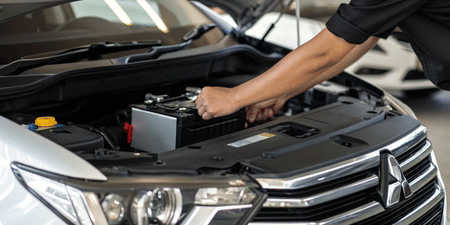
You don’t have to be a mechanic to spot physical signs of a failing battery. Pop the hood and take a look. One of the most common things to look for is corrosion around the battery terminals (the metal posts where the cables connect). This often looks like a white, blue, or greenish powdery buildup. Corrosion can interfere with the electrical connection and prevent your car from starting.
Also, check the battery case itself. If it looks swollen, bloated, or has any cracks, it’s a sign of internal damage, often caused by extreme heat—something we see a lot of here in Florida. A damaged case is a serious issue, and the battery should be replaced right away.
Considering Your Battery's Age
Even if you don’t notice any obvious signs, age is a critical factor. Most car batteries, including those in Mitsubishi vehicles, have a lifespan of about three to five years. The intense Florida heat can often shorten that lifespan, putting extra strain on the battery’s internal components.
If your battery is more than three years old, it’s smart to be proactive. You can check for a sticker on the battery that indicates its manufacture date. If you’re nearing that three-year mark, we recommend having your battery tested during your next oil change. This simple check can give you peace of mind and help you replace the battery on your own terms, not on the side of the road.
Where to Buy Your Next Mitsubishi Battery
Once you’ve confirmed you need a new battery, the next step is figuring out where to get one. You have several great options, each with its own set of benefits, from professional installation to the convenience of shopping from home. The best choice really comes down to your comfort level with car maintenance and how you prefer to shop. Whether you want a full-service experience or you’re ready to handle the swap yourself, there’s a perfect solution waiting for you right here in the Brandon area.
Why Our Service Center Is a Great Choice
For a completely worry-free experience, bringing your vehicle to our service center is your best bet. Our factory-trained technicians know your Mitsubishi inside and out, ensuring you get the exact battery your specific model requires. We handle everything from the initial testing to the final installation and proper disposal of your old battery. You won’t have to worry about matching group sizes or CCA ratings—we take care of all the technical details. It’s the most straightforward way to get back on the road with confidence, knowing the job was done right by professionals who specialize in your vehicle.
Local Auto Parts Stores
If you’re comfortable with a little DIY or just want to see your options in person, local auto parts stores are a fantastic resource. Places like AutoZone and Pep Boys carry a wide variety of brands that fit Mitsubishi vehicles. The staff can usually help you find the right battery and may even offer free installation in the parking lot. Many stores also let you buy a battery online and pick it up at your convenience, which is a great way to make sure they have what you need before you make the trip. This is a solid middle ground between full service and doing it all yourself.
Shopping for Batteries Online
For those who love to compare prices and read reviews, shopping online offers the widest selection. Retailers like Walmart and Amazon allow you to filter batteries by brand, price, and customer ratings, making it easy to find the best deal. You can see what other Mitsubishi owners are saying and have the battery delivered right to your door. Just be sure you’re ordering the correct size and type for your vehicle, as returning a heavy car battery can be a bit of a hassle. Double-checking your owner's manual for the exact specs before you click "buy" is always a smart move.
Don't Forget the Warranty
No matter where you decide to buy your battery, make sure you pay close attention to the warranty. A good warranty is your safety net if the battery fails prematurely. Most new car batteries come with a warranty that includes a free replacement period followed by a prorated period. Some of the best warranties can last for three years or more, giving you valuable peace of mind. Always keep your receipt in a safe place, like your glove compartment, as you’ll need it to make a claim. This simple step can save you a lot of money and frustration down the road.
Your New Battery Is In. Now What?
Okay, the new battery is installed and your Mitsubishi is ready to start. But you're not quite done yet. Swapping out a battery can reset your car's onboard computers, so a few extra steps are needed to get everything back to normal. Think of it as the final checklist before you can confidently hit the road. Here’s what you need to do next to make sure your car is running perfectly and you get the most out of your new battery.
Resetting Your Car's Electronics
Changing your car battery is a bit like unplugging your home computer—it causes some systems to lose their memory. When the power is cut, your car's electronic systems can get out of sync. You might notice a flashing clock, your favorite radio stations gone, or even power windows that don't work correctly. Sometimes, you might even see warning lights on the dashboard. It’s important to address these resets, as they can affect more than just your comfort. Ignoring them could lead to poor fuel economy or even issues with safety features like traction control. If you're unsure how to reset these systems, our factory-trained technicians can handle it for you.
Getting Your Radio and Clock Back
Let's start with the easy stuff: your clock and radio. You’ll need to manually set the time again and reprogram your go-to radio stations. For some Mitsubishi models, the radio might ask for a security code to reactivate. Don't panic—this code is usually printed on a card in your owner's manual packet. If you can't find it, give our service center a call, and we can help you track it down. Taking a moment to get your settings back in order makes your next drive much more enjoyable. It's a small step that makes your car feel like your own again.
How to Dispose of Your Old Battery
Your old car battery can't just be tossed in the trash. It contains lead and acid, which are harmful to the environment if not handled correctly. Proper disposal is essential. The safest way to handle it is to place the old battery in a heavy-duty plastic bag or a plastic container to catch any potential leaks, and always keep it upright. The best part? You don't have to figure out where to take it. Most places that sell car batteries, including our dealership, will take your old one for recycling. You can also take it to a local hazardous waste collection site to be disposed of responsibly.
Tips to Make Your New Battery Last
You've invested in a new battery, so let's make sure it lasts as long as possible. A typical car battery has a lifespan of about six years, but its longevity depends on factors like your driving habits and the climate here in Florida. To get the most out of your new battery, try to avoid leaving lights or electronics on when the engine is off. If you don't drive your Mitsubishi often, consider using a battery tender to keep it charged. Once your battery hits the three-year mark, it's a good idea to have it tested annually. You can schedule a quick battery check with us to make sure it's still holding a strong charge.
Frequently Asked Questions
How can I be sure my battery is the problem and not something else? A slow, struggling engine crank is the most common giveaway. You might also hear a clicking sound when you turn the key or notice your headlights seem dim, especially at startup. If your battery is more than three years old and you're seeing these signs, it's the most likely culprit. The only way to know for certain is to have it tested, which is a quick and easy check we can perform for you.
With so many brands, does it really matter which one I choose for my Mitsubishi? Yes, it does, but the "best" brand really depends on what you value most. If you want maximum durability and a battery that will last for years, a premium brand like OPTIMA is a great investment. If you're looking for a dependable, budget-friendly option that gets the job done, Duralast is a fantastic choice. The most important thing is to pick a reputable brand that meets the power requirements outlined in your owner's manual.
Why do some batteries cost so much more than others? The price difference usually comes down to technology, power, and the length of the warranty. Premium batteries, like the AGM types needed for newer cars with lots of electronics, cost more because they are built to last longer and perform better. A battery with a higher Cold Cranking Amps (CCA) rating and a longer warranty will also have a higher price tag. You're essentially paying for more starting power, greater durability, and better peace of mind.
Can I just install the new battery myself to save a few bucks? While you certainly can replace a battery yourself, it’s a task that requires caution. Modern cars have complex electrical systems that can be damaged if the battery is connected incorrectly. For most drivers, having a professional handle the installation is the safest and simplest option. Our technicians will make sure the correct battery is installed perfectly and will also handle recycling your old one for you.
My radio and clock reset after the new battery was installed. Is something wrong? This is completely normal, so don't worry! When the battery is disconnected, your car's internal memory for things like the clock and radio presets gets wiped clean. You'll just need to set them again. Some radios may ask for a security code to reactivate, which you can usually find in your owner's manual packet. If you can't find it, we can help you track it down.